- January 30, 2026
- By: atharvaeyeclinic.com
- No Comments
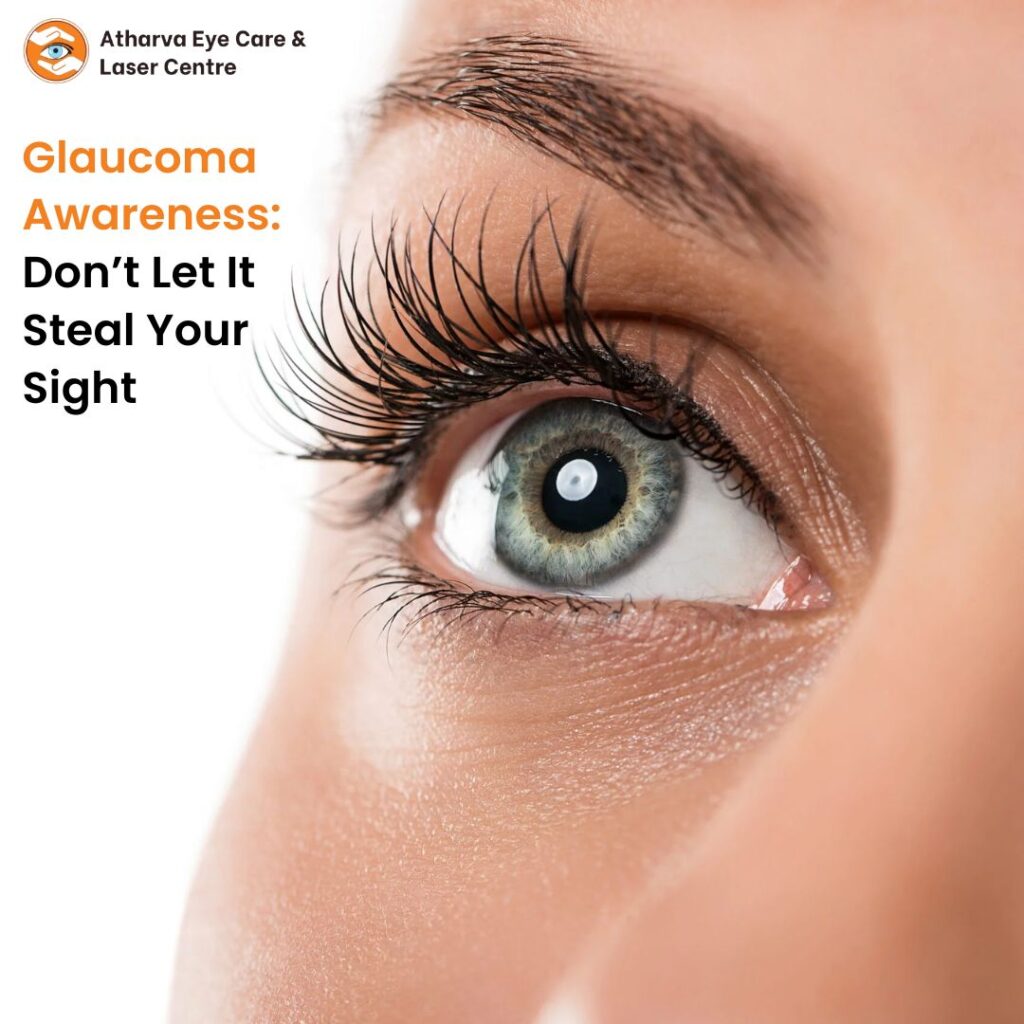
Glaucoma Awareness: Don’t Let It Steal Your Sight
Glaucoma is often called the “silent thief of sight”—and for good reason. It usually develops slowly, without pain or early warning signs, yet it can cause permanent vision loss if left untreated. Many people don’t realize they have glaucoma until significant damage has already occurred.
That’s why glaucoma awareness is so important. Understanding the condition, recognizing risk factors, and getting regular eye check-ups can make the difference between preserving vision and losing it.
What Is Glaucoma?
Glaucoma is a group of eye diseases that damage the optic nerve, which carries visual information from the eye to the brain. This damage is most commonly caused by increased pressure inside the eye (intraocular pressure).
When eye pressure rises, it slowly affects the optic nerve fibers, leading to vision loss that usually starts from the peripheral (side) vision and progresses inward.
Once vision is lost due to glaucoma, it cannot be restored—making early detection critical.
Why Glaucoma Is So Dangerous
The biggest danger of glaucoma is that it often shows no early symptoms. Many people continue with daily life unaware that their vision is being damaged.
Key reasons glaucoma is dangerous:
- No pain or discomfort in early stages
- Gradual vision loss that’s hard to notice
- Permanent damage if untreated
- Can affect one or both eyes
By the time symptoms become noticeable, significant vision loss may already have occurred.
Types of Glaucoma
Understanding the common types helps raise awareness:
- Open-Angle Glaucoma (Most Common)
- Develops slowly
- Eye pressure increases gradually
- No early symptoms
- Vision loss begins at the edges
- Angle-Closure Glaucoma
- Sudden rise in eye pressure
- Severe eye pain
- Headache, nausea, blurred vision
- Redness and halos around lights
- Medical emergency requiring immediate care
- Normal-Tension Glaucoma
- Optic nerve damage occurs even with normal eye pressure
- Often linked to poor blood flow to the optic nerve
Who Is at Risk of Glaucoma?
Anyone can develop glaucoma, but certain factors increase the risk:
- Age above 40
- Family history of glaucoma
- Diabetes or high blood pressure
- High eye pressure
- Long-term steroid use
- Severe nearsightedness or farsightedness
- Eye injury or trauma
If you fall into any of these categories, regular eye examinations are especially important.
Early Signs You Shouldn’t Ignore
While early glaucoma may not show symptoms, advanced stages can cause:
- Gradual loss of side vision
- Difficulty seeing in low light
- Tunnel vision
- Blurred or patchy vision
- Eye pain or pressure (in some cases)
If you notice any changes in your vision, don’t wait—seek professional evaluation immediately.
How Glaucoma Is Diagnosed
Glaucoma cannot be detected with a simple vision test alone. A comprehensive eye exam includes:
- Measurement of eye pressure
- Examination of the optic nerve
- Visual field testing to check side vision
- Corneal thickness measurement
- Optical coherence tomography (OCT) scans
Regular eye check-ups help catch glaucoma before symptoms appear.
Can Glaucoma Be Treated?
Although glaucoma has no cure, it can be controlled if diagnosed early. Treatment aims to lower eye pressure and prevent further optic nerve damage.
Common treatment options include:
👁️ Eye Drops
- Reduce eye pressure
- Most common first-line treatment
- Must be used regularly
👁️ Oral Medications
- Used when eye drops aren’t sufficient
👁️ Laser Treatment
- Improves fluid drainage
- Minimally invasive
👁️ Surgery
- Recommended when other treatments fail
- Helps control eye pressure long-term
With proper treatment and follow-up, many patients maintain good vision for life.
Importance of Regular Eye Exams
The most effective way to prevent glaucoma-related blindness is early detection through routine eye exams.
General recommendations:
- Adults under 40: Eye exam every 2–3 years
- Adults over 40: Eye exam every 1–2 years
- High-risk individuals: As advised by an eye specialist
Even if your vision feels normal, regular check-ups can detect glaucoma early.
How You Can Protect Your Vision
You can take simple steps to reduce your risk and protect your sight:
- Get regular comprehensive eye exams
- Know your family eye health history
- Follow prescribed treatments strictly
- Avoid self-medicating with steroids
- Maintain a healthy lifestyle
- Manage diabetes and blood pressure
Awareness and proactive care go a long way in preserving vision.
Final Thoughts
Glaucoma may be silent, but its impact is permanent if ignored. Raising glaucoma awareness helps people understand that vision loss from this condition is preventable with early diagnosis and timely treatment.
Don’t wait for symptoms to appear. Protect your eyes, schedule regular eye check-ups, and encourage loved ones to do the same—because when it comes to glaucoma, early action can save your sight.
