- February 10, 2026
- By: atharvaeyeclinic.com
- No Comments
How to Protect Your Eyes from Environmental Pollutants
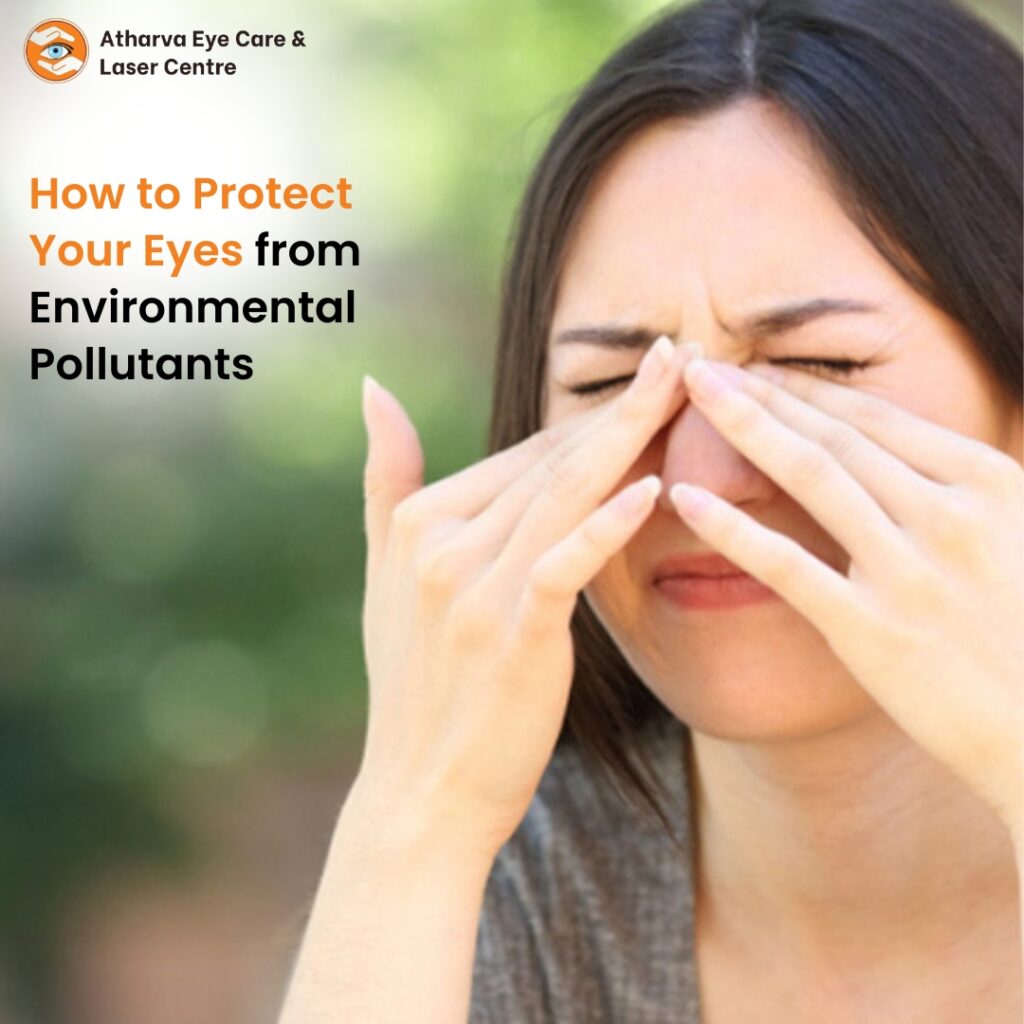
In today’s fast-paced world, our eyes are constantly exposed to environmental pollutants. From vehicle emissions and industrial smoke to dust, pollen, and chemical fumes, the air around us can take a toll on eye health. If you often experience redness, itching, dryness, or burning in your eyes, environmental pollution could be the reason.
Understanding how pollutants affect your eyes and learning simple ways to protect them can help maintain comfort, clarity, and long-term eye health.
How Environmental Pollutants Affect the Eyes
Environmental pollutants are tiny particles and gases present in the air. When these particles come in contact with the eyes, they can irritate the delicate surface and disrupt the natural tear film that keeps eyes moist and protected.
Common eye problems caused by pollution include:
- Dry and gritty eyes
- Redness and irritation
- Watery or itchy eyes
- Blurred vision
- Increased risk of eye infections
Long-term exposure may worsen existing eye conditions and increase the risk of chronic discomfort.
Who Is Most at Risk?
While pollution affects everyone, certain people are more vulnerable to eye damage:
- Individuals living in highly polluted urban areas
- People who spend long hours outdoors
- Children and elderly individuals
- Contact lens users
- People with dry eyes or allergies
If you fall into any of these groups, taking preventive measures is especially important.
Practical Ways to Protect Your Eyes from Pollution
Protecting your eyes does not require complicated routines. Small, consistent habits can make a big difference.
- Wear Protective Eyewear
Sunglasses are not just for style. Wraparound sunglasses or protective glasses help shield your eyes from dust, smoke, and harmful particles. Choose eyewear that blocks UV rays for added protection.
- Avoid Rubbing Your Eyes
When pollutants enter the eyes, the natural reaction is to rub them. However, rubbing can push particles deeper into the eye and increase irritation. Instead, rinse your eyes gently with clean water or use prescribed eye drops.
- Keep Your Eyes Moist
Pollution can dry out your eyes. Using lubricating eye drops helps maintain moisture and flush out irritants. Always use eye drops recommended by an eye specialist.
- Wash Your Face and Eyes Regularly
After returning home from outdoors, wash your face and eyes with clean water. This helps remove pollutants that may have settled around the eyes and eyelashes.
- Maintain Clean Indoor Air
Indoor pollution can be just as harmful as outdoor pollution. Keep your living space well-ventilated, avoid smoking indoors, and consider using air purifiers to reduce dust and airborne particles.
Eye Care Tips for People Who Work Outdoors
If your job requires long hours outdoors or in polluted environments, extra care is essential:
- Wear safety goggles when exposed to dust or chemicals
- Take regular breaks to rest your eyes
- Keep spare eye drops handy
- Follow workplace safety guidelines strictly
Consistent protection can prevent long-term eye damage.
Nutrition and Eye Protection
A healthy diet strengthens your eyes from within. Antioxidants help fight damage caused by pollution and oxidative stress.
Include these nutrients in your diet:
- Vitamin A for eye surface health
- Vitamin C and E to reduce inflammation
- Omega-3 fatty acids to prevent dry eyes
- Lutein and zeaxanthin for retinal protection
Fruits, vegetables, nuts, seeds, and fish support overall eye wellness.
Limit Screen Time to Reduce Strain
Pollution-related eye irritation can worsen with prolonged screen exposure. Digital screens reduce blinking, making eyes drier and more uncomfortable.
Follow the 20-20-20 rule: every 20 minutes, look at something 20 feet away for 20 seconds. This simple habit relaxes eye muscles and improves comfort.
When to See an Eye Specialist
Occasional irritation due to pollution is common, but persistent symptoms should not be ignored. Consult an eye specialist if you experience:
- Continuous redness or pain
- Blurred or reduced vision
- Sensitivity to light
- Excessive watering or discharge
Early diagnosis can prevent complications and ensure proper treatment.
Long-Term Eye Protection Starts with Awareness
Environmental pollution may be unavoidable, but eye damage doesn’t have to be. Awareness, preventive care, and timely medical attention can help preserve your vision and comfort.
Simple steps like wearing protective eyewear, keeping your eyes clean, maintaining indoor air quality, and following a healthy lifestyle can go a long way in protecting your eyes from environmental pollutants.
Clear Vision in a Polluted World
Your eyes work hard every day, helping you experience the world around you. Protecting them from pollution is not just about comfort—it’s about safeguarding your long-term vision.
By adopting these easy eye care habits and scheduling regular eye check-ups, you can enjoy clearer, healthier eyes even in polluted environments.
