- February 13, 2026
- By: atharvaeyeclinic.com
- No Comments
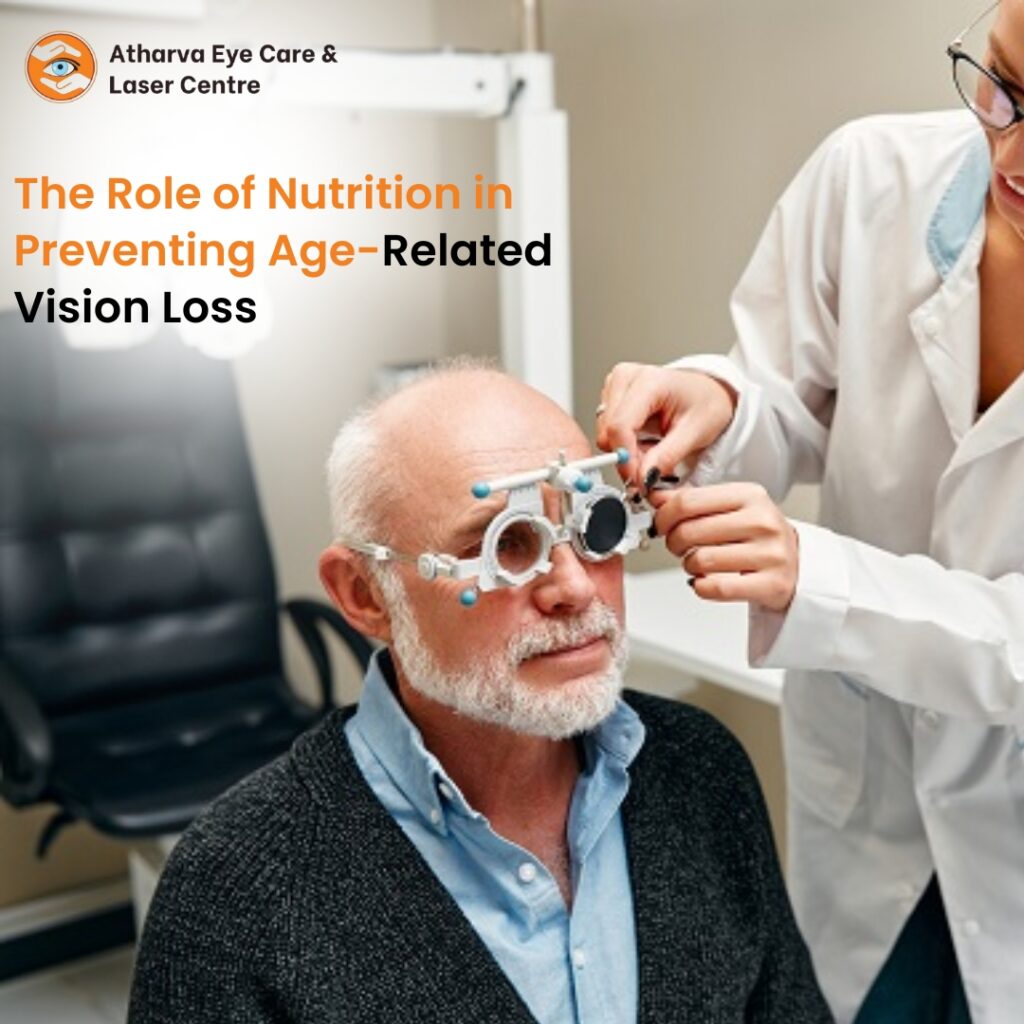
The Role of Nutrition in Preventing Age-Related Vision Loss
As we grow older, changes in our vision can feel like a natural part of aging. Difficulty reading small print, reduced night vision, or increased sensitivity to light are common concerns. While age-related vision loss cannot always be completely avoided, research shows that proper nutrition plays a powerful role in protecting eye health and slowing vision decline.
Understanding the connection between what you eat and how well you see can help you maintain clearer vision and independence for years to come.
Why Eye Health Changes with Age
With aging, the eyes undergo structural and functional changes. Blood flow to the eyes may reduce, protective cells weaken, and oxidative stress increases. These changes raise the risk of common age-related eye conditions such as:
- Age-related macular degeneration (AMD)
- Cataracts
- Dry eye syndrome
- Glaucoma
Nutrition helps by supplying essential vitamins, minerals, and antioxidants that protect eye tissues and reduce damage caused by aging.
How Nutrition Supports Healthy Vision
Your eyes rely on a constant supply of nutrients to function properly. A balanced diet helps:
- Protect eye cells from oxidative damage
- Improve blood circulation to the eyes
- Support retinal function
- Reduce inflammation
- Strengthen the eye’s natural defense system
Poor nutrition, on the other hand, can accelerate eye degeneration and increase the risk of vision loss.
Essential Nutrients for Eye Health
Certain nutrients are especially important for preventing age-related vision problems:
- Vitamin A
Vitamin A is vital for good vision, especially in low light. A deficiency can lead to night blindness and dry eyes. Foods rich in vitamin A include carrots, sweet potatoes, spinach, and mangoes.
- Vitamin C
This powerful antioxidant helps protect the eyes from damage caused by free radicals. It may also slow the progression of cataracts. Citrus fruits, oranges, guava, bell peppers, and broccoli are excellent sources.
- Vitamin E
Vitamin E supports eye cell health and reduces oxidative stress. It is commonly found in almonds, sunflower seeds, peanuts, and vegetable oils.
- Lutein and Zeaxanthin
These antioxidants are concentrated in the retina and help protect against age-related macular degeneration. They act as natural filters against harmful blue light. Green leafy vegetables like kale, spinach, and broccoli are rich sources.
- Omega-3 Fatty Acids
Omega-3s support retinal health and help prevent dry eyes, a common issue in older adults. Fatty fish like salmon, sardines, walnuts, and flaxseeds are good sources.
- Zinc
Zinc helps transport vitamin A from the liver to the retina and supports night vision. It is found in whole grains, legumes, nuts, seeds, and dairy products.
Nutrition and Age-Related Eye Diseases
A nutrient-rich diet can significantly lower the risk of developing serious eye conditions:
- Macular degeneration: Diets high in antioxidants and omega-3s may slow progression
- Cataracts: Vitamins C and E may reduce the risk of lens clouding
- Dry eyes: Healthy fats improve tear quality and eye lubrication
- Glaucoma: Proper nutrition supports optic nerve health
While nutrition alone cannot cure these conditions, it plays a crucial role in prevention and management.
Healthy Eating Habits for Better Vision
Adopting simple dietary habits can go a long way in protecting your eyesight:
- Eat a colorful variety of fruits and vegetables
- Include leafy greens daily
- Choose whole grains over refined foods
- Add healthy fats like nuts, seeds, and fish
- Stay hydrated throughout the day
- Limit processed foods, sugar, and excessive salt
A balanced diet not only benefits your eyes but also supports overall health and immunity.
Do Eye Supplements Help?
In some cases, eye supplements may be recommended, especially for individuals at high risk of macular degeneration. However, supplements should never replace a healthy diet. It is important to consult an eye specialist before starting any supplements to ensure safety and effectiveness.
The Importance of Regular Eye Check-Ups
Good nutrition works best when combined with regular eye examinations. Eye specialists can detect early signs of age-related eye conditions and provide timely guidance. Early intervention, along with lifestyle changes, can help preserve vision and quality of life.
A Vision-Friendly Lifestyle
Nutrition is just one part of maintaining healthy eyes. Protecting your vision also includes:
- Wearing sunglasses to block UV rays
- Managing blood pressure and diabetes
- Avoiding smoking
- Taking breaks from screens
- Getting adequate sleep
See Clearly, Age Confidently
Age-related vision loss does not happen overnight, and neither does prevention. By making thoughtful nutrition choices today, you can support your eye health well into the future. Healthy eating, regular eye check-ups, and lifestyle balance together create a strong foundation for lifelong vision.
Your eyes deserve care at every age—and it starts on your plate.
